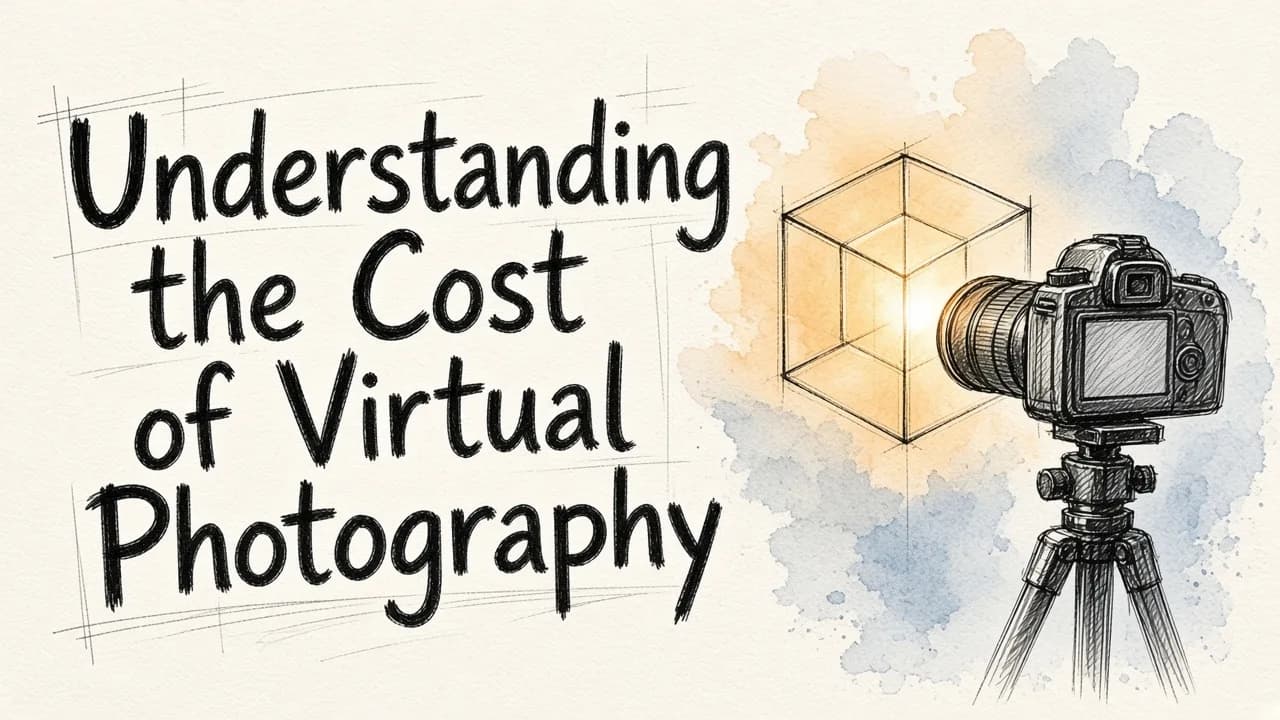
The cost of virtual photography ranges from absolutely free or a nominal software subscription fee of $10 to $50 per month for self-serve AI platforms, up to several thousand dollars for bespoke 3D computer-generated imagery (CGI) designed by specialized agencies. In comparison to traditional commercial photography, which regularly commands budgets between $1,000 and $10,000 per shoot when accounting for studio space, photographer fees, model hiring, and post-production, virtual photography offers an incredibly cost-effective alternative. It eliminates physical logistics, reduces asset generation costs by up to 90 percent, and allows businesses to scale their visual content library instantly.
What is Virtual Photography?
Virtual photography is the creation of hyper-realistic imagery using digital tools instead of a physical camera. Instead of setting up a tripod, adjusting studio lights, and capturing a physical object, virtual photography relies on digital assets. This is achieved through two primary methods: 3D modeling and rendering (CGI), and generative artificial intelligence (AI).
In the retail and e-commerce spaces, companies often build 3D models of their products. Once a digital twin of a product exists, software can place it in any environment, apply different lighting setups, and capture it from any angle imaginable.
In the generative AI space, virtual photography has evolved even further. Instead of building complex 3D files from scratch, users can upload basic product images or portraits and use text descriptions to generate brand-new, studio-quality images. This democratization of the creative process means that high-end visuals are no longer restricted to companies with massive production budgets.
Traditional Photography vs. Virtual Photography: The Cost Breakdown
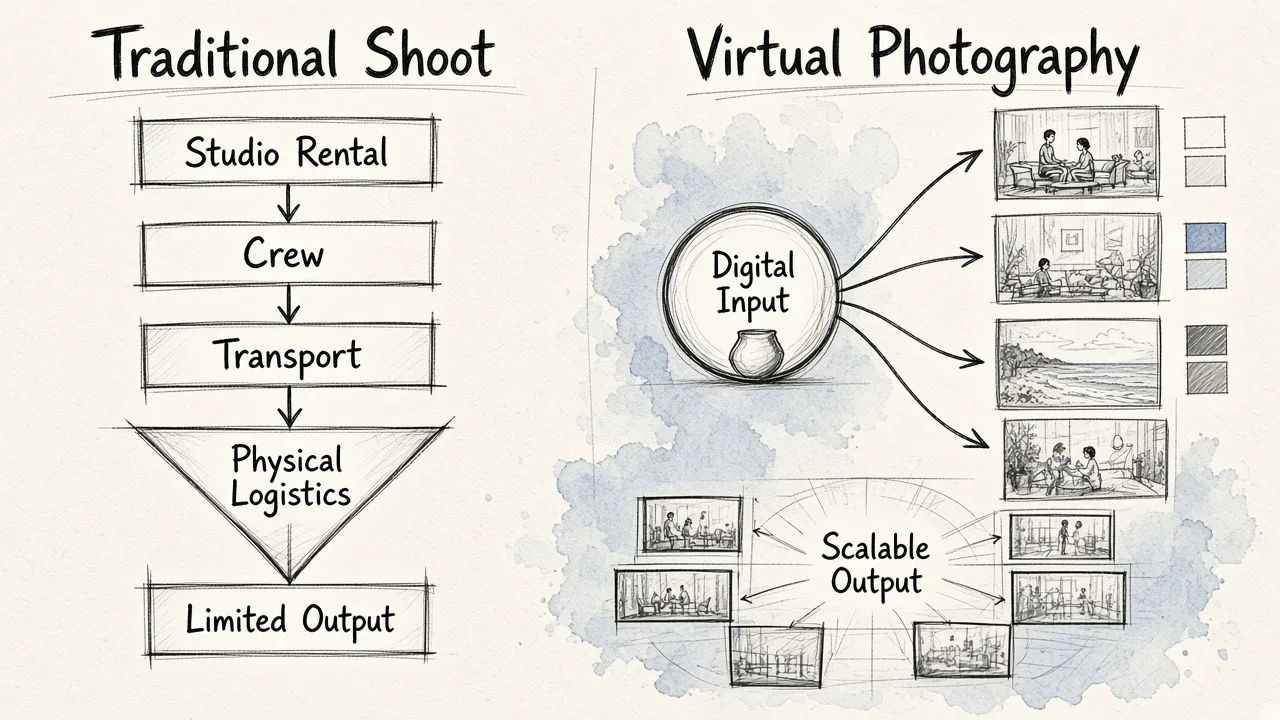
To appreciate the savings virtual photography offers, it helps to examine the direct expenses associated with a traditional commercial photo shoot:
- Photographer and Crew Fees: A professional commercial photographer charges hundreds or thousands of dollars per day. Assistant fees, digital techs, stylists, and coordinators add to this total.
- Studio Rental and Location Fees: Renting a commercial studio can cost anywhere from $500 to $2,000 a day. If you shoot on location, you may need permits, insurance, and travel budget.
- Models and Talent: If your shoot requires human subjects, you must pay modeling fees, usage rights, and hair and makeup artists.
- Shipping and Logistics: Sending physical prototypes or products to a studio takes time and money, especially if the products are bulky, fragile, or need to be returned.
- Post-Production Retouching: Professional editing, color correction, and background cleaning can cost between $50 and $150 per image.
Virtual photography dismantles these cost centers. Because the entire process takes place inside a computer, there are no physical studios to book, no models to hire, and no shipping logistics to coordinate. If you need a product shot in a sleek loft apartment, you do not need to rent a loft: you simply generate or render that environment digitally.
Key Factors Influencing the Cost of Virtual Photography
The overall cost of virtual photography varies depending on your chosen methodology, the complexity of your assets, and your production volume.
1. CGI 3D Rendering vs. Generative AI
If you hire an agency to build highly accurate, custom 3D CAD models of complex industrial machinery or custom furniture, the initial setup cost can be high. Creating a single 3D asset might cost $500 to $1,500. However, once that digital model is built, generating future images with different lighting or backgrounds costs only a fraction of that price.
If you use generative AI platforms, the cost drops significantly. Users do not need to build complex 3D models. Instead, you upload a standard photo and use AI tools to swap backgrounds, clean up imperfections, or generate brand-aligned lifestyles. This reduces the cost per image to cents.
2. Volume of Assets
With traditional photography, the cost increases linearly with the number of variations. If you need a product shot in ten different color schemes, you must manufacture, ship, and photograph ten different items. With virtual photography, changing the color or texture of a digital asset is a matter of a few clicks. Large e-commerce brands requiring thousands of product angles save exponentially as their image volume scales.
3. Output Type: Stills vs. Video
Still images are the most affordable virtual assets to produce. Moving images, video ads, and interactive 3D viewers require more computing power and creative time, which naturally places them at a higher price tier than static imagery.
The Financial Benefits of AI-Powered Virtual Photography
For businesses looking to optimize their marketing budgets, AI-powered image editing platforms offer the highest return on investment. Platforms like EditorAI enable businesses of any size to create, edit, and scale visual content without technical training or expensive hardware.
The primary financial benefit of AI-powered virtual photography is the consolidation of tools. Instead of paying for separate background removal software, stock photo subscriptions, ad templates, and professional retouching, marketing teams can use a unified, AI-driven suite. This eliminates overlapping software subscriptions and slashes turnaround times from weeks to seconds.
Additionally, virtual photography eliminates the cost of creative mistakes. In a traditional shoot, if a product reflection is wrong or an essential angle is missed, correcting it requires a costly reshoot. With digital editing and generation, correcting an image involves simple text prompts or quick object removal tools, making the creative pipeline highly forgiving and agile.
Virtual Headshots and Corporate Portraits
One of the fastest-growing applications of virtual photography is the creation of corporate headshots. Organizing a physical photo shoot day for a growing company is an expensive logistical challenge. You have to secure a photographer, coordinate schedules, set up a backdrop in the office, and manage the inevitable makeup and outfit changes. If a new employee joins the team the following month, you have to organize a separate, costly shoot or settle for a mismatched profile photo.
The virtual alternative is incredibly cost-effective. By using digital tools, employees can upload simple smartphone snapshots and receive studio-quality portraits in professional attire and cohesive office backdrops. This ensures brand consistency across the entire organization at a fraction of the price of a traditional session.
If you are looking to update your team's online presence, you can learn how to create a business profile picture with AI to see how simple and budget-friendly the process is. For an even deeper understanding of how to transition casual photos into corporate-ready assets, our guide on how to get professional portraits from photos offers practical, step-by-step instructions.
E-commerce and Product Virtual Photography Costs
For e-commerce brands, high-quality images are the direct driver of conversion rates. Shoppers cannot touch or feel online products, so they rely entirely on visual cues.
Traditionally, showcasing a product in multiple lifestyle contexts required renting props, setting up scenes, and taking dozens of photos. This process is slow and expensive. Virtual photography changes the math:
- Background Swapping: You can take a single, clean shot of a product on a plain table, and use AI to place it on a marble kitchen counter, a wooden patio, or a minimalist office desk.
- Ad Generation: Instead of designing separate ads from scratch, marketers can feed their virtual product images into ad creators to generate social media banners and promotional graphics instantly.
- Dynamic Customization: If you sell a product in multiple colors, you do not need to photograph every variant. You can change the product color digitally while preserving the exact reflections, shadows, and textures of the original shot.
By moving these workflows to the cloud, e-commerce brands can test new marketing concepts, launch seasonal campaigns, and update their websites in real time without waiting on physical production cycles.
How to Choose the Right Solution for Your Budget
To determine which virtual photography route is right for your business, consider your budget and creative requirements:
- Enterprise 3D Modeling (High Budget): Best for large manufacturing, furniture, or automotive companies that require exact, engineering-grade 3D renders of complex products. This involves high upfront costs but yields incredibly versatile assets.
- Self-Serve AI Platforms (Low to Mid Budget): Ideal for startups, small-to-medium businesses, e-commerce shops, and marketing agencies. Using an AI editor like EditorAI allows you to perform background removals, generate lifestyle product shots, and create clean corporate portraits on a highly affordable, scalable subscription basis.
By substituting traditional, logistically heavy photo shoots with virtual alternatives, businesses can allocate their saved capital toward product development, customer acquisition, and business growth. Virtual photography is no longer a futuristic luxury for major brands: it is a practical, budget-saving reality for modern creators.